

Licensed Sport and Performance Support · Los Angeles & Online California
Sport & Performance Psychology in Los Angeles
— reach your peak, then stay there
Struggling with something?
You’ve put in the hours. You know your craft, your body, and your preparation. But when the pressure rises, something changes: Your thoughts speed up, your confidence slips, and your focus lands everywhere except where you need it…
Sport and performance psychology can help you build the mental skills to stay present, respond to pressure, and perform more like yourself when it matters.
Grayslate offers sport and performance psychology in Los Angeles and online throughout California for athletes, performers, teams, and people working in high-pressure environments.



Let’s start here
The Mental Game Is a Skill. Skills Can Be Trained.
Physical preparation and raw talent is only part of performance. What happens internally can shape how well you access the skills you already have.
You may feel prepared during training but tense up in competition. You might struggle to reset after one mistake, second-guess decisions that normally feel automatic, or become so focused on the outcome that you lose contact with the moment in front of you.
Getting in your own head does NOT mean you lack talent, discipline, or commitment. It usually means your mind and nervous system are responding to pressure in ways that need attention and practice.
Sport and performance psychology focuses on the mental and emotional side of showing up under pressure. The work may include developing focus, regulating anxiety, rebuilding confidence, strengthening motivation, responding to setbacks, and creating routines that help performance feel more consistent.
At Grayslate, the goal is never to turn you into someone else. It is to help you access what is already there with greater steadiness, flexibility, and trust.
Skills We Build
- Focus and attention control
- Confidence & constructive self-talk
- Emotional regulation under pressure
- Motivation and sustainable goal setting
- Resilience after mistakes and setbacks
- Pre-performance and recovery routines
Ways We Work
- Mental skills training
- Imagery and rehearsal
- Process-based goal setting
- Nervous-system regulation
- Values and identity exploration
- Support for emotional or clinical concerns affecting performance
Four Ways Performance Psychology Can Change the Game
01. Perform More Consistently
You may know what you are capable of but struggle to reproduce it when the stakes feel high. Performance psychology helps you notice what changes under pressure and develop routines that make your preparation easier to access.
02. Work Through Mental Barriers
Fear of failure, perfectionism, overthinking, and harsh self-criticism can drain attention from the task at hand. The harder you try to force those thoughts away, the louder they may become.
Together, you can learn to respond differently without needing every uncomfortable thought or feeling to disappear first.
03. Build Resilience Under Pressure
Mistakes happen. Calls don’t always go your way. Some performances simply feel off.
Resilience is the ability to recover without turning one difficult moment into the rest of the game, event, audition, or season. That recovery can be practiced through attention shifts, emotional regulation, self-talk, and reset routines.
04. Protect Your Well-Being
High performance should not require sacrificing your mental health, relationships, or sense of self.
Sport and performance psychology can help you develop a more sustainable relationship with achievement, including healthier motivation, clearer boundaries, and an identity that’s not entirely dependent on results.
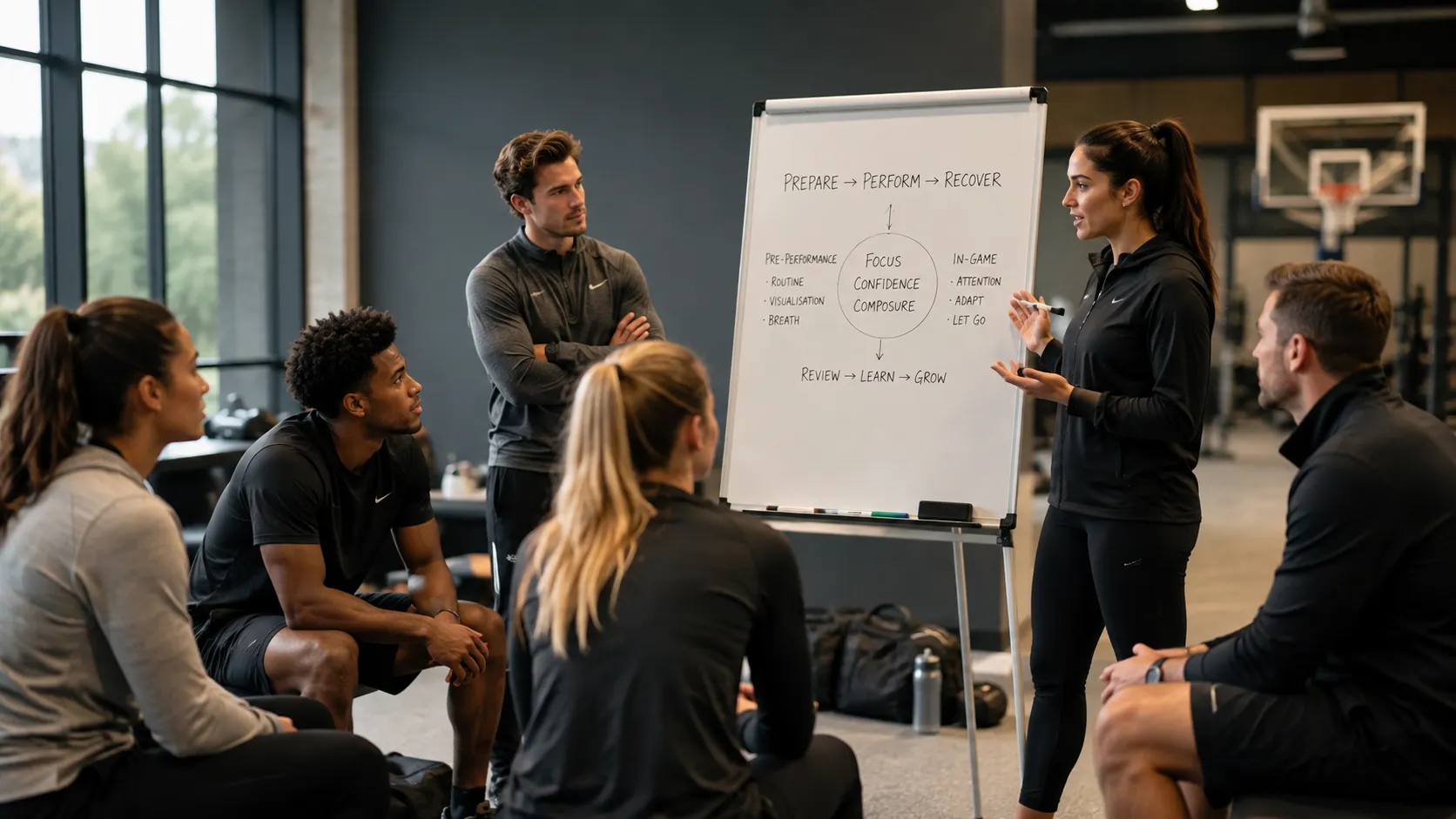
Why it works
A Structured, Evidence-Informed Approach to Performing Under Pressure
There is no single mental trick that works for every person, sport, or performance environment. A strategy that helps one athlete improve their game may leave another feeling flat, and a goal-setting system that motivates one performer may intensify perfectionism for someone else.
The work begins by understanding your patterns.
Sessions may focus on:
- Directing and sustaining attention
- Managing physical and emotional activation
- Developing pre-performance routines
- Using imagery and mental rehearsal
- Setting process-based goals
- Building more useful self-talk
- Recovering after errors or setbacks
- Strengthening confidence without depending solely on outcomes
These skills are practiced in relation to real situations, not as abstract ideas that stay in the therapy room. You might review what happened before a difficult performance, identify the moment your focus shifted, and test a more workable response.
Sometimes the concern is primarily performance-based. At other times, anxiety, trauma, depression, ADHD, burnout, relationship stress, or identity concerns are affecting the way someone performs.
Often, both are present.
Because Grayslate’s sport and performance services are provided by licensed clinicians, the work can include practical mental skills while also making room for the emotional patterns underneath them. You don’t have to separate the “performance problem” from the rest of your life before asking for support.
For Anyone Whose Success Depends on Showing Up Under Pressure
You don’t need to be a professional athlete, or even call yourself an athlete, to benefit from performance psychology.
Youth and Teen Athletes
Young athletes may be balancing competition, school, friendships, family expectations, and a developing sense of identity. Support can focus on confidence, enjoyment, emotional regulation, communication, and maintaining a healthy relationship with sport.
Collegiate, Amateur, Elite, and Professional Athletes
Higher levels of competition can bring greater visibility, uncertainty, time demands, and pressure to perform. Sessions may address consistency, confidence, injury recovery, role changes, burnout, or the psychological demands of balancing sport with the rest of life.
Coaches and Teams
Performance does not happen in isolation. Coaches and teams may work on communication, leadership, trust, cohesion, role clarity, and the way a group responds to mistakes, conflict, or high-pressure moments.
Performing Artists
Actors, musicians, dancers, and other performers face many of the same challenges as athletes: auditions, evaluation, repetition, physical demands, public mistakes, and the need to deliver on cue.
Executives and High-Pressure Professionals
Founders, leaders, first responders, and other professionals may seek support for decision-making, emotional regulation, focus, confidence, and sustainable performance under prolonged stress.
What Brings People to Sport and Performance Psychology
Performance Anxiety
You may feel capable in practice but become tense, distracted, or overly self-conscious when others are watching. Performance anxiety can show up as racing thoughts, physical tension, nausea, shakiness, breathlessness, freezing, rushing, or trying too hard to control every movement.
The goal isn’t necessarily to eliminate nerves: It’s to help you work with them more effectively.

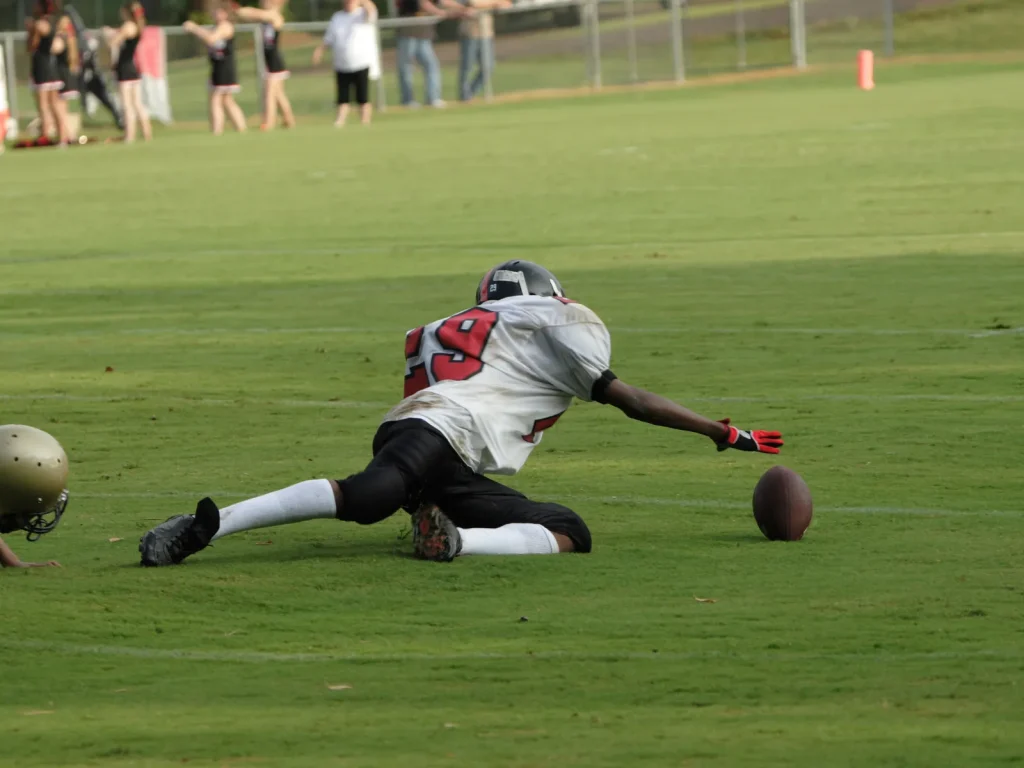
Focus and Composure
Distraction can happen before a performance, in the middle of it, or after one frustrating moment. You may replay a mistake, worry about the score, react to the crowd, or lose track of the next task.
Mental skills training can help you recognize where your attention has gone and bring it back with less judgment and wasted energy
Confidence and Self-Talk
Confidence may feel solid one week and disappear after a poor result, a coach’s comment, or a comparison with someone else.
Sessions can help you build confidence around preparation, values, and adaptability, not only recent outcomes. You can also learn to recognize when internal criticism has stopped being useful and started getting in the way.


Motivation and Burnout
Sometimes pushing harder works for a while… Then it stops, or you stop.
You may feel exhausted, detached, irritable, unmotivated, or guilty for no longer enjoying something that once mattered deeply. Performance psychology can help you understand what is draining you and rebuild a more sustainable relationship with training and achievement.
Injury and Return to Play
Physical recovery and psychological readiness don’t move at the same pace. Even after medical clearance, you may hesitate, fear reinjury, mistrust your body, or feel disconnected from your previous level of confidence.
The work can support emotional recovery, realistic pacing, and a more grounded return to activity.


Identity and Transitions
A change in role, roster status, level of competition, career, or physical ability can affect more than performance. It can bring up the question: Who am I if I am not doing this in the same way anymore?
Therapy can provide room to process that transition without minimizing what has been lost or what may come next.
What Working Together Looks Like

Free Consultation
The first step is a free 20-minute consultation. You can share what has been happening, what you hope will change, and what kind of performance environment you are navigating.
This is also a chance to ask questions and get a feel for whether Grayslate seems like the right match. There is no pressure to commit during the call.

Assessment and Plan
Early sessions explore your performance history, current stressors, strengths, pressure responses, emotional patterns, and goals.
This is a clinical and performance-focused assessment, not formal neuropsychological testing. When testing or another specialized service may be useful, your clinician can discuss that separately.
Together, you will identify a few clear priorities and build a plan that fits your needs.

Train, Practice, and Refine
Mental skills improve through practice, reflection, and adjustment.
Sessions may involve rehearsing strategies, reviewing recent performances, identifying patterns, and refining what you do before, during, and after high-pressure moments. The plan can evolve as your season, role, health, or goals change.
Licensed Clinicians Who Understand Performance and the Person Beneath It
Grayslate’s sport and performance psychology services are provided by licensed California clinicians who are members of the Association for Applied Sport Psychology and are currently pursuing Certified Mental Performance Consultant certification.
That means the work is grounded in both performance principles and clinical responsibility.
The work is attachment-informed, inclusive, and neurodiversity-affirming. You may come in wanting help with focus or confidence and discover that grief, identity, perfectionism, family pressure, ADHD, trauma, relationship stress, or neurodivergence is part of the picture.
You don’t need to know exactly where the performance concern ends and the emotional concern begins. Your clinician can help you sort through it.


Grazel Garcia, LMFT
Grazel brings an attachment informed, neurodiverse-affirming therapy and relational perspective to sport and performance work. She has extensive experience working with athletes, actors, public figures and high-pressure roles. Her approach can be especially helpful for athletes and performers navigating confidence, emotional regulation, identity, perfectionism, interpersonal pressure, or the way relationships affect performance.
She works with warmth, directness, and attention to the cultural and personal context surrounding achievement. For additional privacy, Grazel offers on-site or concierge therapy services.

Dr. Tyler Howard, PsyD
Dr. Howard brings expertise in clinical psychology, attention, executive functioning, cognitive patterns, and neurodivergence. Her work can support people whose performance is affected by overthinking, inconsistent focus, ADHD-related challenges, stress, or difficulty translating preparation into action.
Her approach makes room for both practical skill development and the broader psychological factors shaping performance.


Accessible Performance Support by Design
Cost can be one more source of pressure, especially for students, young athletes, artists, and families already investing heavily in training, travel, equipment, or education.
Grayslate is a private-pay, out-of-network practice. Depending on your plan and the clinical nature of the service, you may be able to use a superbill to request reimbursement from your insurance provider.
A limited number of sliding-scale spaces are available as part of Grayslate’s commitment to making care more accessible.
You are welcome to ask about fees, availability, reimbursement, and lower-cost options during the consultation. These conversations are routine, and there is no need to feel awkward bringing them up.

In Atwater Village and Online Across California
In-person sport and performance psychology sessions are available at Grayslate’s office in Atwater Village, in Northeast Los Angeles.
Online sessions are available to clients located throughout California and can be useful for athletes, performers, and professionals managing travel, training schedules, competitions, rehearsals, school, or demanding work calendars.
Some people choose fully online sessions, while others prefer meeting in person when their schedule allows.
Questions
Sport & Performance Psychology FAQs
Your Talent Is Already There
Let’s Make Sure Pressure Does Not Hide It
You don’t have to wait until confidence returns on its own or keep trying to power through the same mental block.
Schedule a free 20-minute consultation to discuss what is happening, current clinician availability, and what support could look like in person in Los Angeles or online across California.